A home activity space can be small and still be thoughtfully arranged. Its usefulness depends on whether you can follow your existing instructions there, move around the equipment, and put things away afterward. The first planning question is therefore about the space you actually have.
A product photo often shows a generous room and a complete set of equipment. Your room may serve several purposes and your plan may require very little. This checklist helps identify practical constraints before a purchase; it does not certify the area as safe or choose exercises for you.
Look at the path through the room
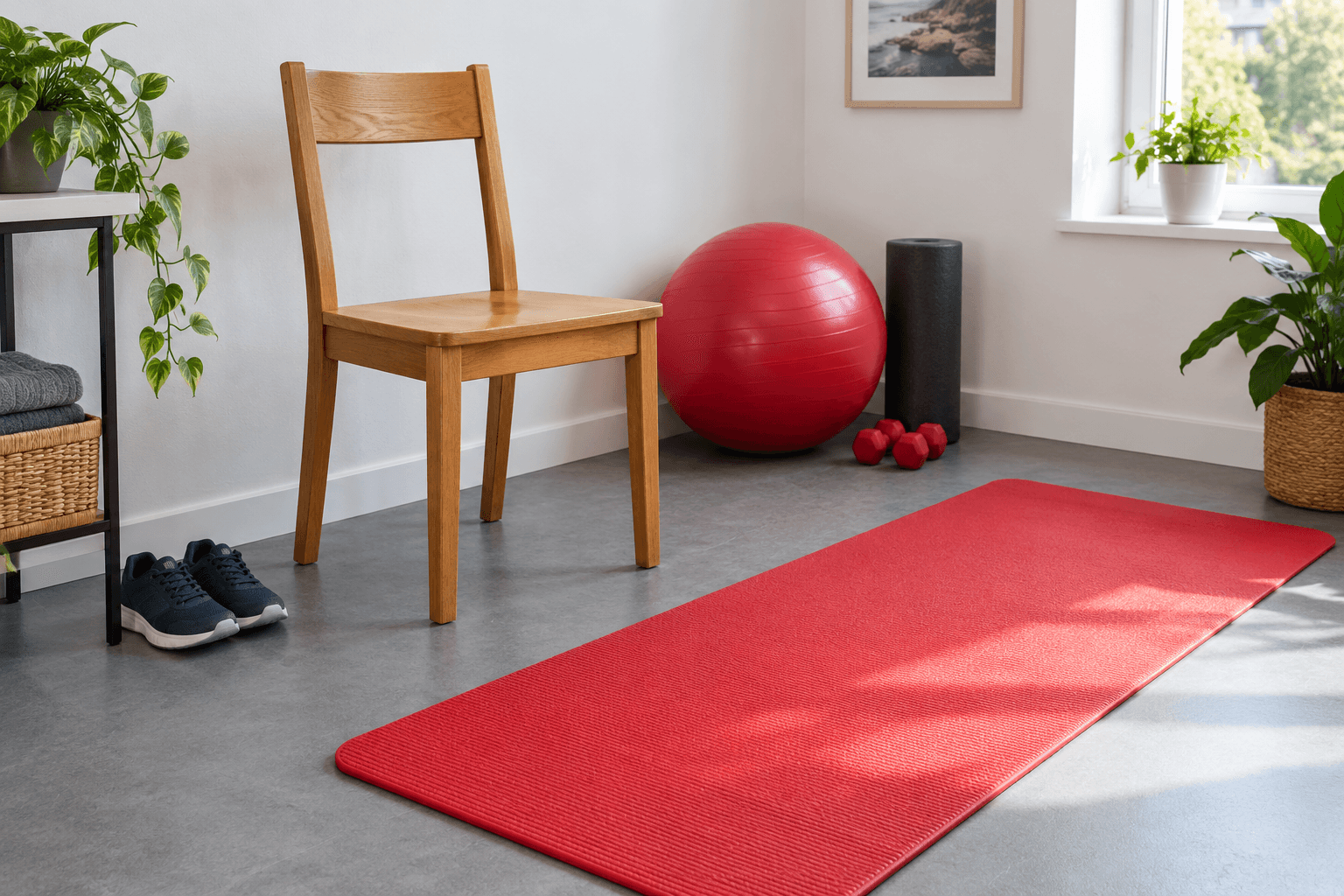
Consider how you enter the space, reach equipment, and leave it. A mat, a loose cord, or a storage box may change that path. Look at the area in the way it will actually be used, rather than only when everything has been arranged for a photograph.
Keep the activity area separate from the route used by other people where possible. Decide where each item goes after use so that the setup can be repeated. This is an editorial planning checklist, not a substitute for a home assessment when you need one.
Match supports to the instructions
The NHS strength reference advises using a stable chair without wheels that will not slip for its chair-based examples. A chair already in the room is not automatically appropriate for every movement. Read the source instructions and consider whether the required support is available.
Do not treat a generated editorial photograph as a form demonstration or equipment approval. The photographs on this site illustrate the topic. Our reference cards link to the source material so that the actual instructions remain accessible; suitability still depends on the activity and your circumstances.
Allow room for storage and retrieval
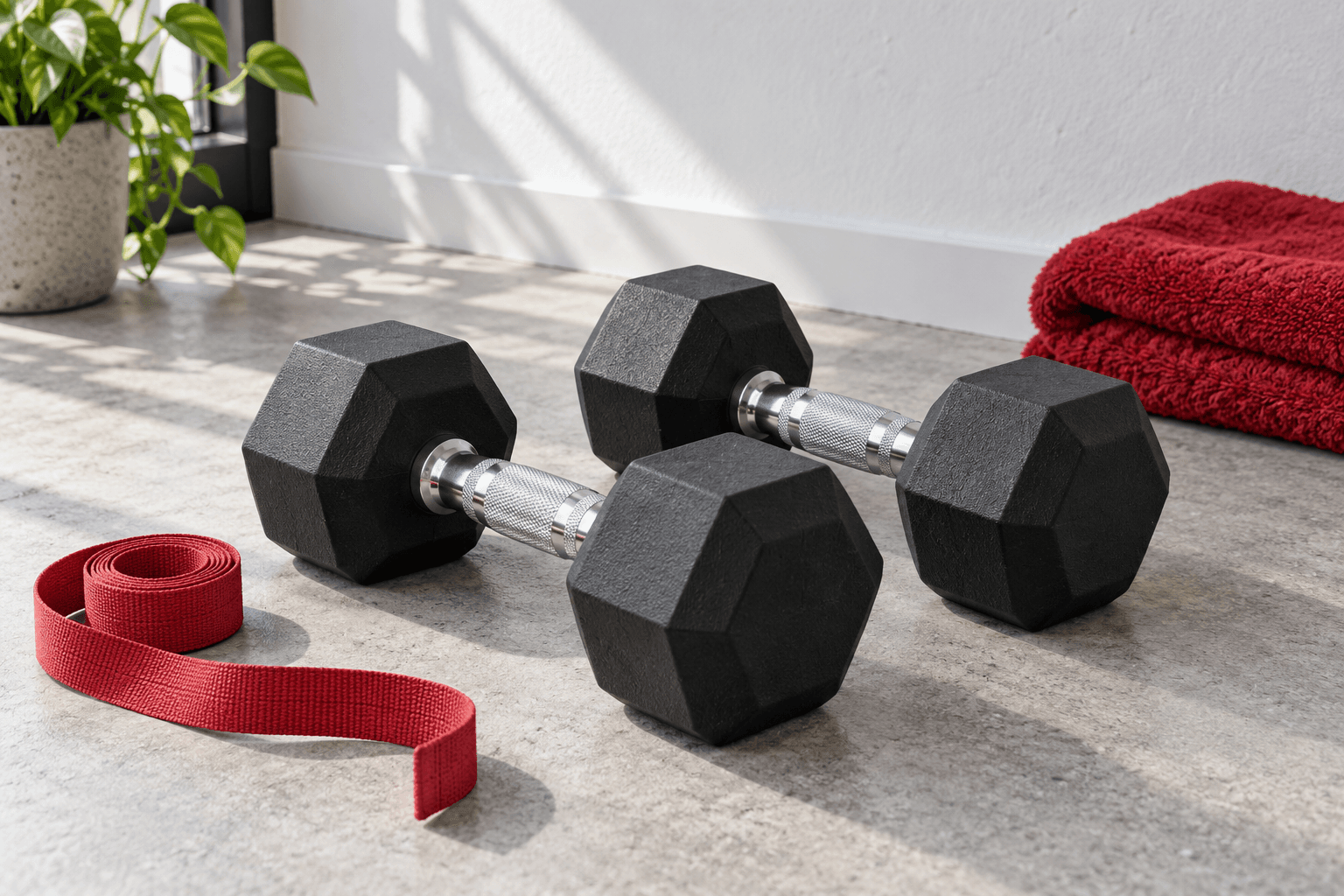
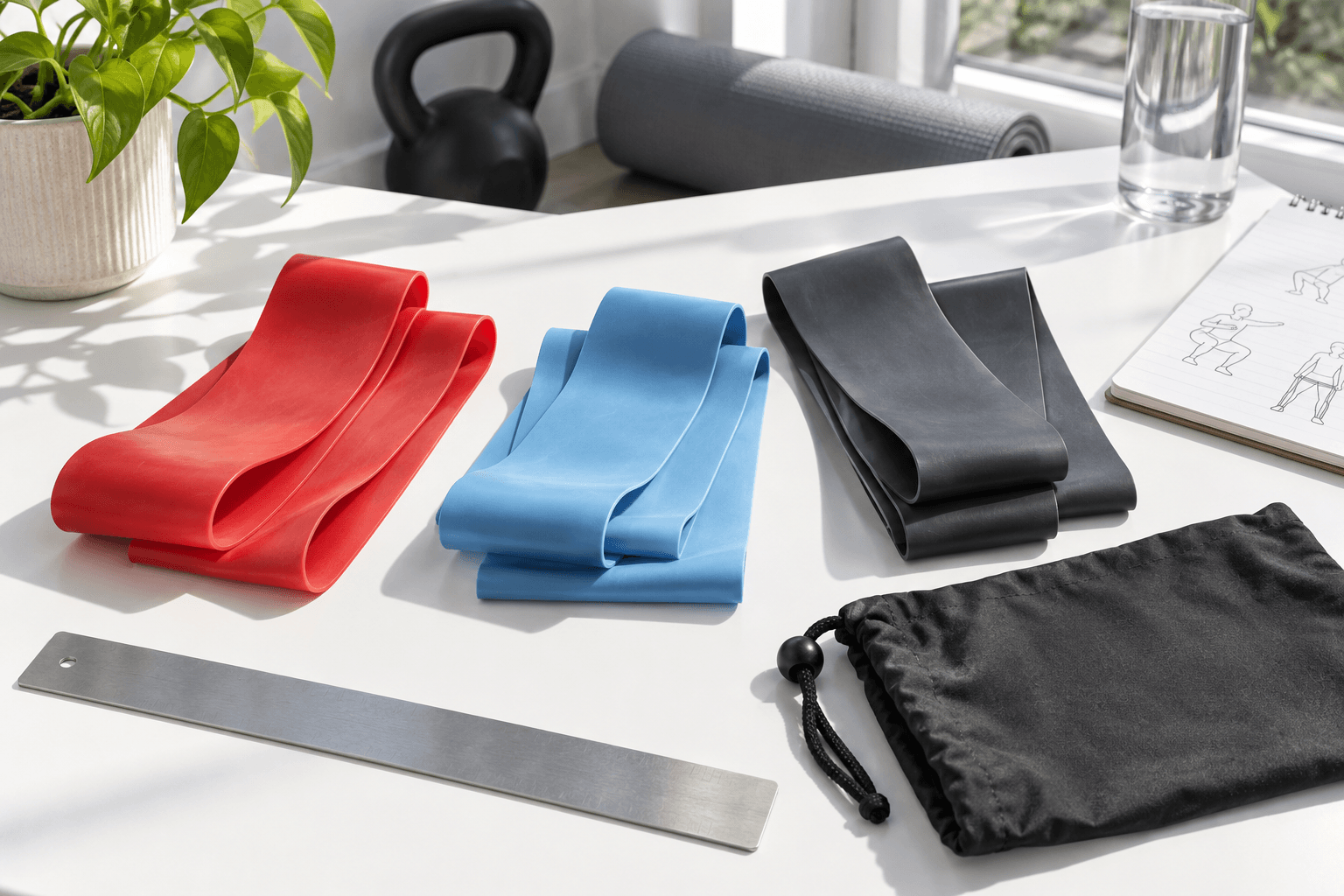
The footprint of a product includes where it lives between sessions. A pair of dumbbells needs a place to rest, and the route to pick them up matters. A resistance band may take little storage space but still needs an identifiable package, instructions, and an appropriate setup for use.
Before buying, measure the available area and compare it with the selected product’s details. Keep any delivery or assembly requirements in the purchase notes. A larger set may bring additional storage work even if the individual items look compact.
Buy for the plan you have
Write down the particular item your existing plan requires and what you need to confirm before ordering. Weight unit, number of pieces, band format, and delivered cost are examples of useful purchase fields. Missing information is a reason to ask a question, rather than fill it in from a different product listing.
Once the item arrives, keep its instructions and identification with your activity record. If the setup differs from what was planned, ask the appropriate person about the difference. A notebook can preserve the answer; it cannot establish that an improvised substitution is equivalent.
The next useful conversation.
- Can I use the space as the actual instructions require?
- Where will the equipment go afterward?
- Am I ordering the exact unit, quantity and format intended?
Reading record
Sources checked October 3, 2026. We have not performed a clinical assessment, product-use test, or certification audit. No clinician review is claimed.