THERABAND offers several elastic-resistance formats. The official Performance Health overview discusses progression and links to brand resources, but an overview is not the same thing as the facts for a selected package. A familiar color or product-family name does not answer every buying question.
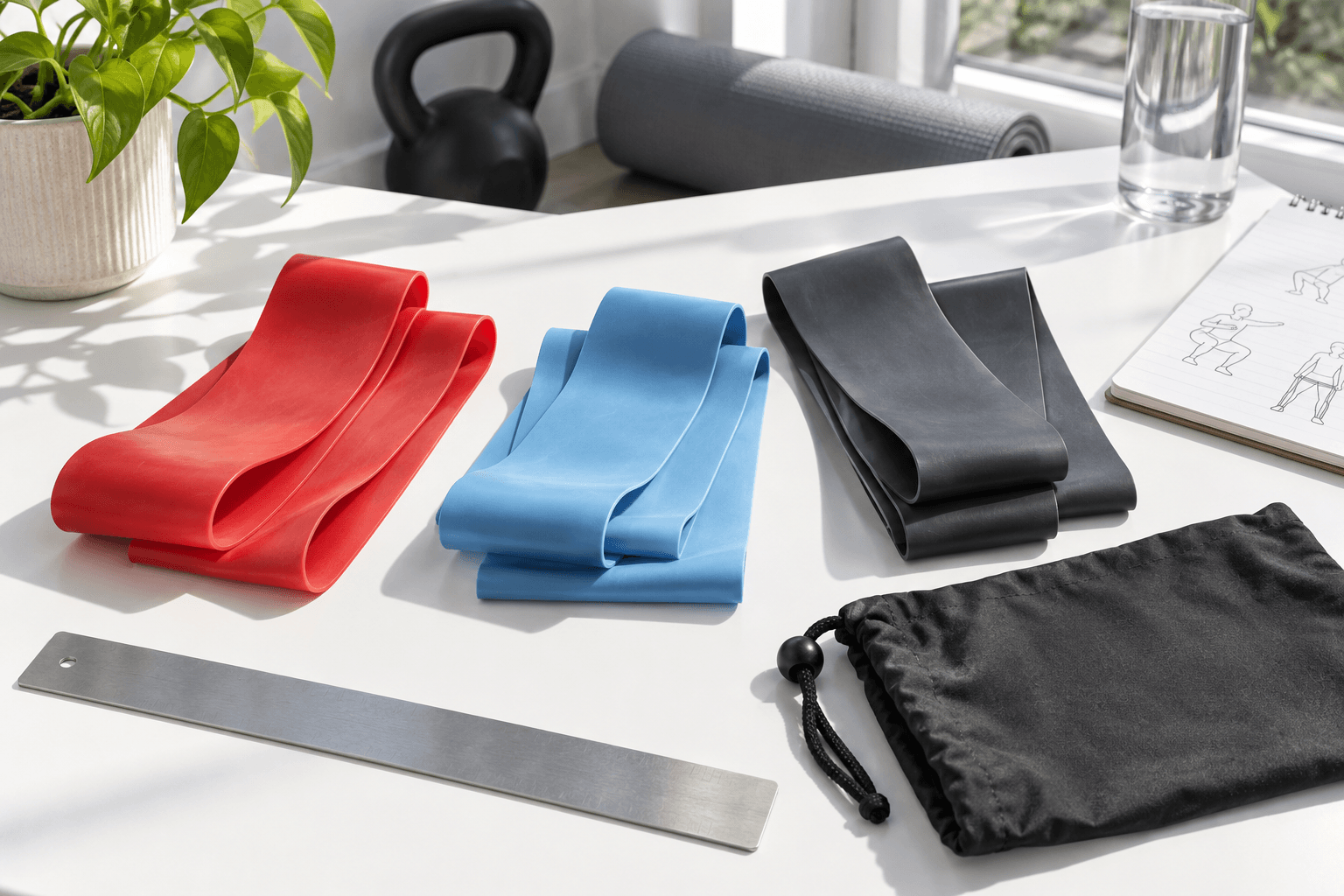
This review reads the public brand overview checked October 3, 2026. It does not evaluate an independently purchased band, validate durability claims, or recommend a resistance level. The image is an original generic equipment illustration, and our activity notebook does not treat elastic resistance as a fixed dumbbell mass.
Identify the format you are actually buying
Before comparing offers, write down the specific format and package: a flat band, tubing, or another selected design. Record material, dimensions, accessories, and any stated latex information from the exact listing. We leave those fields unresolved here because the retained overview does not establish one selected SKU.
This matters when an existing exercise instruction calls for a particular setup. A different shape or accessory should not silently become an equivalent substitute. Keep the question visible and use the specific manufacturer instructions rather than borrowing details from a nearby product.
Read resistance numbers with their conditions
The brand overview discusses a progression system and cites testing conditions for non-latex bands, including elongation percentages. Such conditions explain why a pull-force value is not simply the weight label from a dumbbell. The exact product and setup remain important.
Do not compare colors across unrelated brands as though a color were a universal unit. Our notebook lets you record a band description separately from pounds or kilograms. A readable entry can include brand, format, level, and setup without producing an invented cross-equipment total.
Ask about the instructions and package contents
Check which pieces are included and how the selected equipment is intended to be used, stored, and inspected. A product-family page may link to several resource types. Use the instructions for the actual item rather than assuming that a general exercise card applies to every product in the range.
Material and latex questions should also be resolved from the selected package. The overview used for this article cannot establish an individual reader’s suitability. Nor do manufacturer research claims give this publication a basis to promise that an item will work safely in every home setup.
Keep the purchase comparison practical
Compare the same format, quantity, dimensions, included accessories, and delivered charge. We do not provide a cheapest-band ranking from an overview without a current selected-price quote. A seemingly inexpensive listing can describe a different length, roll, or quantity.
Once you have the relevant item and instructions, identify it clearly in the session notes. Future entries become easier to interpret when the equipment description stays consistent. If the setup changes, record the change rather than treating every entry under the same exercise name as identical.
The next useful conversation.
- What exact format, material and quantity does the listing describe?
- Which conditions accompany its resistance notation?
- Do the included instructions match the item and my existing plan?
Reading record
Sources checked October 3, 2026. We have not performed a clinical assessment, product-use test, or certification audit. No clinician review is claimed.