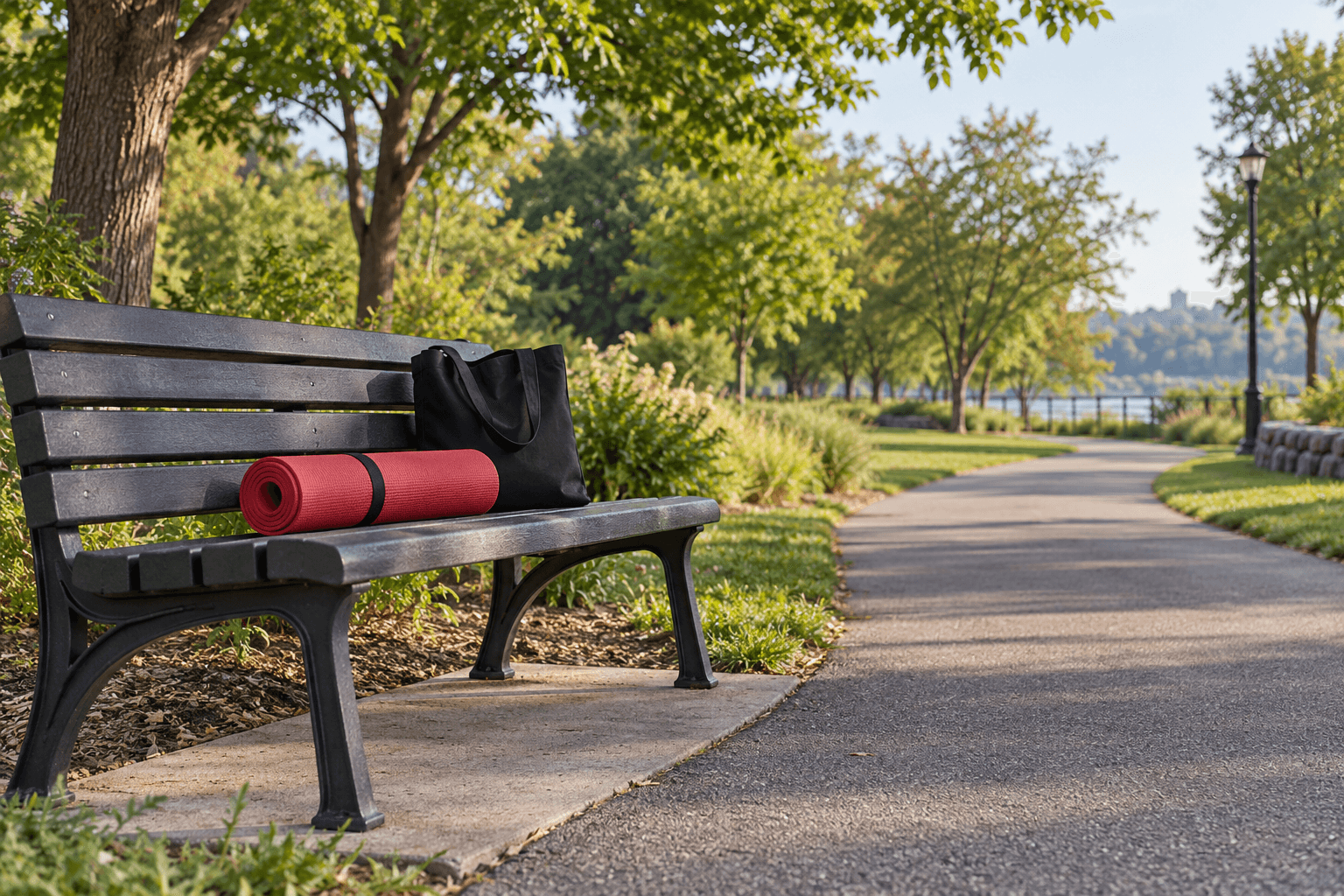
A blank week can quickly become an ambitious week. Every open day looks available until work, travel, appointments, and ordinary household tasks are added. The purpose of a first schedule is to make your existing activity plan easier to carry out, rather than to fill every space on the calendar.
Start with the activities and instructions you have already chosen or received. This article does not supply a seven-day exercise prescription. It helps attach that plan to real places, times, and equipment, then distinguish what you intended from what you actually completed.
Put the setting on the calendar
For each planned activity, identify where it will happen. A class requires travel and a confirmed place; a home session requires usable space and the right equipment. A walk may depend on a route or an indoor alternative. Those details are part of scheduling, even though they are not repetitions or minutes.
Write the preparation beside the session rather than assuming it will happen. Finding a notebook, clearing the floor, or checking a class booking may be the immediate action. If the setting is not ready, a calendar entry can look settled while the practical work is still missing.
Keep the plan flexible enough to use
The National Institute on Aging describes gradual increases in activity and a gradual return after interruptions such as illness or travel. A missed day is therefore useful context, not a reason for our tools to automatically double the next entry. The notebook does not create replacement workouts.
Decide how you want to handle a schedule change before one occurs. You may need to move the appointment, ask about the plan, or leave the original entry as a note. Keeping the original intention and the actual session distinct makes that decision visible without inventing progress.
Record what happened in ordinary language
After an activity, enter the date and a recognizable title. Add minutes if you measured the whole session, and identify any movements you want to remember. If you did not measure duration, leave it blank. A blank field communicates something different from a guessed number.
Add a short note about the setting or equipment if it helps distinguish this session from another. For example, the same movement name with a different band or support should not be mistaken for an identical setup. Our entries retain that description rather than turning every activity into a single comparable score.
Review the week before planning the next one
Choose a week start date in the notebook to see seven calendar days. The board shows your saved entries, including whether they are planned or completed. It does not grade the week or decide whether your exercise prescription has been met. That would require information and assessment the tool does not have.
Look for practical questions: Was the location available? Did the equipment match the instructions? Were the entries understandable afterward? Bring the relevant notes to your next discussion. A week that produces clearer information has value even when it does not match the original calendar.
The next useful conversation.
- Where and when can this existing plan realistically happen?
- What preparation is still needed?
- How will I record a change without treating it as a completed session?
Reading record
Sources checked October 3, 2026. We have not performed a clinical assessment, product-use test, or certification audit. No clinician review is claimed.